

Support Hours: 09:00–18:00 (GMT+8) · Messages and quote requests are accepted 24/7.
Small batch trial production (NPI/bridging mass production): supports CNC, injection molding small batch, sheet metal, vacuum casting and 3D printing, combined with DFM review and quality delivery

Low-Volume Production

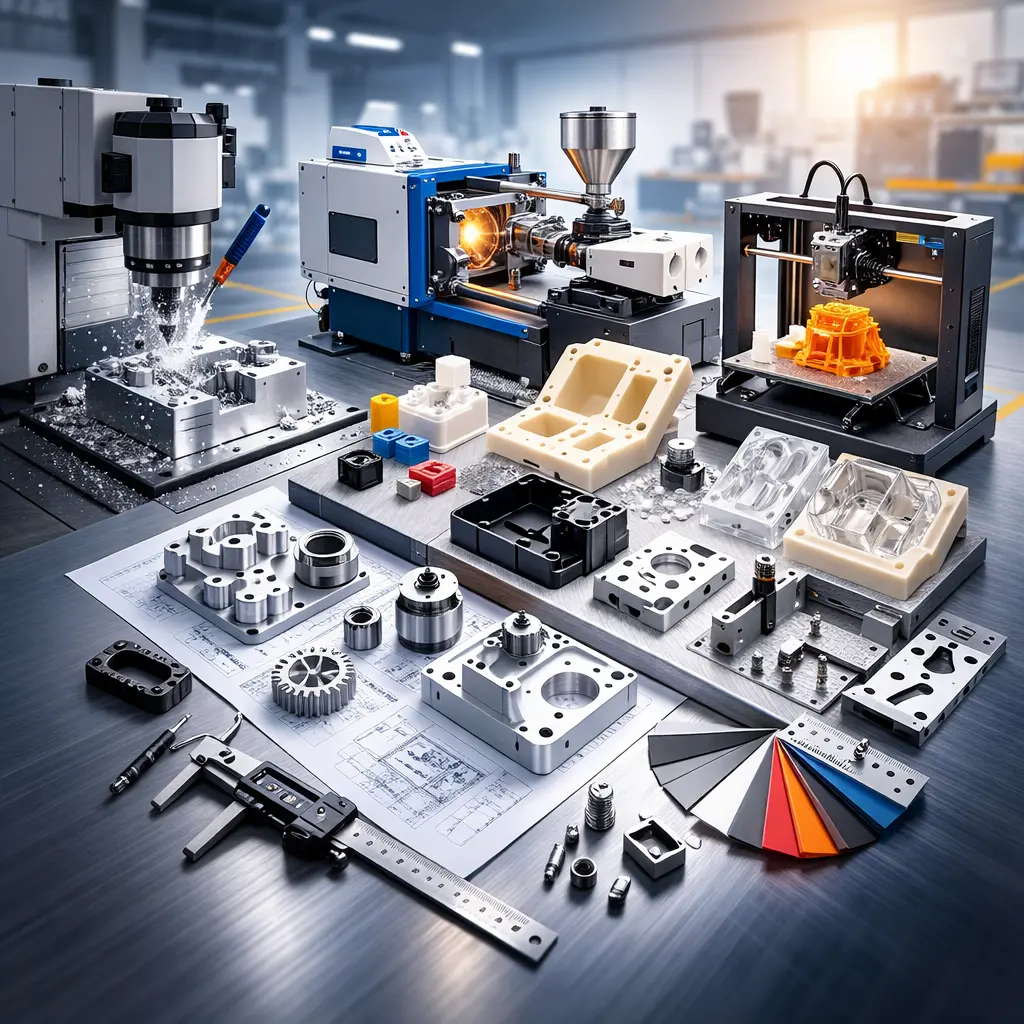
Bridge validated designs into production with controlled low-volume manufacturing. XFabro combines CNC machining, sheet metal fabrication, 3D printing, vacuum casting, and low-volume injection molding with DFM review and process inspection to confirm process capability, assembly consistency, appearance standards, and production readiness. Available outputs include CTQ requirements, inspection records, and recommendations for scaling volume.

This service is ideal when you need to:

Validate the process window and critical-dimension stability before NPI.
Confirm assembly consistency and appearance standards across a small batch.
Compare cost, lead time, and scale-up risk across multiple manufacturing processes.
Reduce tooling changes and batch-defect risk before increasing volume.
Get an Instant Quote View Our Capabilities
For an accurate review: Share the target quantity, materials, finishes, critical dimensions, and assembly requirements. NDAs and controlled file access are available.

Low-Volume Production Capabilities

XFabro combines CNC machining, sheet metal fabrication, vacuum casting, 3D printing, and low-volume injection molding with DFM review and process inspection. Depending on your requirements, deliverables can include CTQ lists, dimensional or CMM reports, appearance criteria, and recommendations for scaling production.

  1. Production Readiness and Consistency Review

    Review structure and assembly risks before production, including thin-wall deformation, clamping datums, hole alignment, surface protection, and tolerance buildup. The findings define the verification list, CTQs, and key control points.

  2. DFM Review for Scale-Up

    Evaluate workholding, tool access, formability, thin walls, finishing, and tolerance buildup. Receive practical optimization recommendations and a risk list before committing to higher volumes.

  3. Multi-Process Production Planning

    Match CNC machining, sheet metal fabrication, vacuum casting, low-volume injection molding, and 3D printing to your goals, with cost and lead-time comparisons to support process selection.

  4. Process Inspection and Dimensional Control

    Confirm critical dimensions and datums, with inspection records, dimensional or CMM reports, appearance checks, and assembly feedback available on request. Results remain traceable for future production.

  5. Production-Representative Materials and Finishes

    Select production-representative metals or engineering plastics and finishes such as sandblasting, anodizing, plating, painting, and screen printing for more meaningful validation.

When to Use Low-Volume Production

Use a controlled small batch to evaluate assembly consistency, functional reliability, unit economics, supply readiness, and production decisions before scaling.

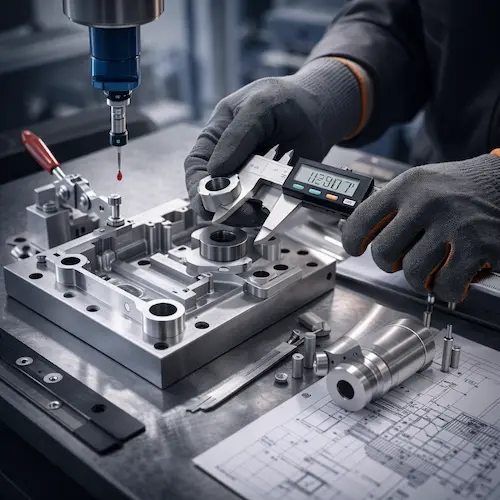
Assembly consistency verification: Whether the assembly of multiple parts is smooth and whether the cumulative tolerance is amplified

Assembly Consistency

Confirm that multi-part assemblies remain repeatable across a batch and identify tolerance buildup or assembly-chain risks before production volumes increase.

Key checks:

Repeatable positioning, insertion, fastening, and clamping
Tolerance buildup that causes gaps, offsets, or interference
Difficult assembly steps and recurring rework points
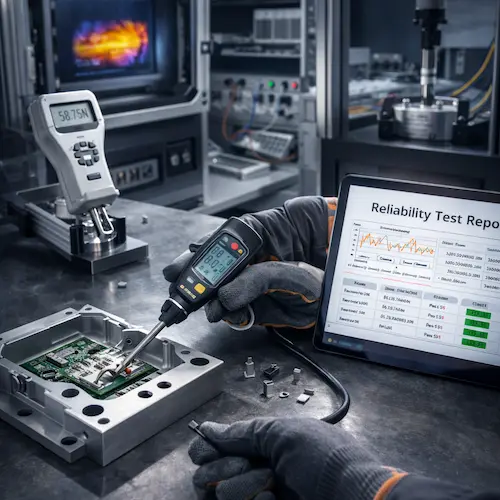
Functional and reliability testing: long-running tests, batch functional consistency verification

Functional and Reliability Testing

Test a representative batch under realistic operating conditions to evaluate long-term performance, consistency, and potential failure risks before mass production.

Key checks:

Durability, wear, looseness, and fatigue over extended operation
Performance variation and abnormality rates across the batch
Failure modes under overload, temperature, vibration, or other limits
Cost and supply chain assessment: true unit cost and whether the process is suitable for amplification

Cost and Supply Chain Assessment

Use real batch data to understand unit-cost drivers and supply stability, then assess whether the selected process can meet target cost, yield, and production pace at scale.

Key assessments:

Unit cost across material, labor, fixtures, finishing, and loss
Scale-up readiness across cycle time, yield, and bottlenecks
Material, outsourced process, and finish consistency
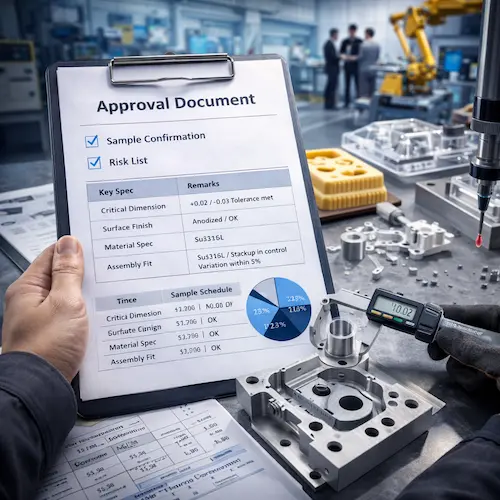
Final confirmation before mass production: Determine whether to enter injection molding/batch CNC and whether another structural optimization is needed

Final Production Readiness Review

Use the batch results to confirm the production route, decide whether another design or process iteration is needed, and lock the standards required for release.

Key judgments:

Release to injection molding, batch CNC, or another production route
Remaining DFM, assembly, or appearance improvements
Locked critical dimensions, appearance standards, and inspection criteria

Low-Volume Production Process

  1. Upload Drawings and Requirements

    • Upload STEP, IGES, STL, DWG, DXF, or other supported 2D and 3D files.
    • Share quantity, materials, finishes, appearance criteria, critical dimensions, datums, GD&T, assembly requirements, and acceptance standards.
    • Initial file analysis: 1–5 minutes
  2. Engineering Review and Process Recommendation

    • Identify consistency risks such as thin-wall deformation, clamping datums, hole or assembly chains, and surface protection.
    • Recommend the appropriate combination of CNC, sheet metal, vacuum casting, low-volume injection molding, and 3D printing.
    • Preliminary plan for standard parts: 30–60 minutes
  3. DFM Review and Quote

    • Engineers review the design and production goals, then provide DFM recommendations and a risk list.
    • Compare process options, materials, finishes, pricing, and lead times.
    • Project review feedback: within 24 hours
  4. Production and In-Process Inspection

    • Manufacture to the confirmed plan with multi-process coordination and batch control.
    • Record critical dimensions, appearance, and assembly results; dimensional or CMM reports are available when required.
    • Typical manufacturing lead time: vacuum casting 3–7 days; CNC 5–12 days; low-volume injection molding depends on tooling and trial progress.
  5. Delivery and Scale-Up Recommendations

    • Receive the finished parts, required inspection records, and batch-traceable exception feedback.
    • Use the findings to plan further optimization, volume increases, or process adjustments.
    • Shipping: domestic delivery 1–7 days; international delivery varies by destination.

From Low-Volume Production to Scale-Up

A controlled low-volume run turns production findings into reusable engineering decisions, creating a clearer path to scale while reducing repeated trials and uncertainty.

Reusable Production Findings

Beyond the finished parts, project outputs can include CTQs and datums, appearance criteria, process risks, material and finish recommendations, process limits, and guidance for the next production volume.

Reusable findings + traceable risks + controlled scale-up
  • Lock critical dimensions, datums, and inspection methods.
  • Prioritize consistency risks and explain exception causes.
  • Define the recommended process and scale-up strategy.

Typical Paths to Production

The next route depends on design maturity, target volume, quality results, and commercial requirements. Findings from the low-volume run carry forward into the selected process.

Low-volume production → stable process → volume ramp-up → mass production
  • CNC production: continue batch delivery while improving repeatability and process capability.
  • Injection molding: proceed to tooling, mold trials, and production after the design is stable.
  • Further optimization: refine the design or process when yield, assembly, or appearance issues remain.

Reusable findings and a clear scale-up strategy help resolve risks earlier and reduce rework, tooling changes, and batch defects.

Ready to Validate Your Production Plan?

All uploaded content is treated securely and confidentially.

FAQs