
Support Hours: 09:00–18:00 (GMT+8) · Messages and quote requests are accepted 24/7.

Stainless steel_SUS201 sheet metal fabrication material (SUS201 stainless steel plate / 201 series stainless steel sheet metal), suitable for prototypes and functional validation, small batch structural parts and cosmetic parts, supports brushing, polishing, electrolytic polishing, passivation and laser engraving, upload drawings for quick quote and delivery.

Stainless steel_SUS201 (sheet metal fabrication)

Stainless steel_SUS201 (sheet metal fabrication) is documented with typical properties, suitable applications, finishing options, and design guidance for Sheet Metal Fabrication.

Commonly used stainless steel for sheet metal Prototype and functional validation Structural parts/cosmetic parts Cost-Performance Balance Can be used for surface texture Small batch delivery

Quote checklist: Upload your 3D model and, when available, a 2D drawing. Identify the required process, material, quantity, critical dimensions, finish, appearance standard, and target delivery date.

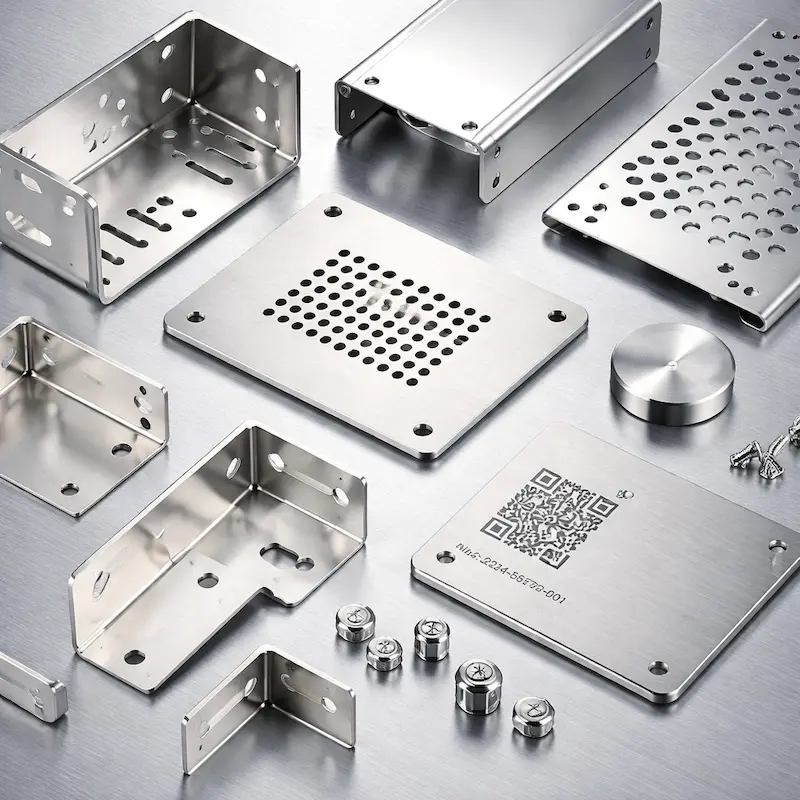
Stainless steel_SUS201 sheet metal sample: suitable for prototypes and functional validation, small batch structural parts and cosmetic parts; optional surface solutions such as brushing, polishing, electrolytic polishing, passivation and laser engraving

Key Material and Manufacturing Parameters

Engineering note: Values below are typical reference ranges. Final manufacturability, tolerances, material condition, surface finish, cost, and lead time depend on the drawing, geometry, quantity, and selected process.

Upload CAD files and mark critical features for an engineering review before production.

ProcessSheet metal fabrication (cutting/bending/punching/riveting, etc., evaluated according to drawings and structure)
Material nameStainless steel_SUS201
Accuracy±0.2 mm
Minimum wall thickness1.0mm
Service temperature300-600℃
Tensile strength450-1100MPa
Density7.7-8.5 g/cm³
ApplicationsSuitable for scenarios such as prototypes and functional validation, you can choose a more suitable material solution based on appearance, strength, temperature resistance and cost targets.
Finishing Brushing, polishing, electrolytic polishing, passivation, laser engraving
Typical lead timeRelated to plate thickness, structural complexity, quantity and finishing; clear delivery and expedited options will be given after uploading the file

Finishing

Brushed (directional texture)

Suitable for exterior parts with consistent metal texture effect. It is recommended to note the drawing direction (relationship with the long edge/bent edge) and the definition of the appearance surface to prevent the assembly surface/functional surface from being affected by drawing.

Polishing (improves finish)

Used to reduce surface roughness and improve gloss. It is recommended that the "mirror/normal polishing" target and acceptable minor scratch standards be clearly stated in the drawings or notes.

Electropolishing (more uniform brightening effect)

More suitable for projects that require appearance consistency and surface cleanliness. It is recommended to clarify the appearance range and whether passivation is required at the same time.

Passivation (surface protection)

Used to improve surface stability and corrosion resistance. If it is used in a humid/lightly corrosive environment, it is recommended to note the usage scenarios and cleaning requirements to facilitate the selection of a more appropriate treatment process.

Laser engraving (logo/serial number)

Suitable for logo, model, scale and traceability code. It is recommended to provide vector files, position size and shading effect requirements (contrast/readability).

Why choose stainless steel_SUS201 (sheet metal fabrication)

Cost and performance balance

Suitable for prototype verification and small batch projects, it is easier to strike a balance between cost, delivery and strength requirements.

Both structure and appearance can be considered

It can be used for structural support and appearance panel sheet metal parts; the appearance surface can be enhanced with brushing/polishing and other solutions.

Flexible processing routes

Supports cutting, bending, opening and grooving, and assembly structure implementation; suitable for the product verification stage with fast iterations.

Surface options available

support Brushing, polishing, electrolytic polishing, passivation, laser engraving, to facilitate appearance consistency and logo traceability.

Recommended Applications

  • Prototype and functional validation: Need to quickly create sheet metal prototypes that can be assembled and tested
  • Small batch structural parts/cosmetic parts: Sensitive to cost and lead time, but also hoping for a metallic feel
  • Need surface texture: Brushing/polishing/electrolytic polishing, or laser engraving logo required
  • General usage environment: Indoor or lightly corrosive environment (passivation and reasonable cleaning and maintenance are recommended)

Consider Another Material or Process

  • Strong corrosion/long-term moisture: It is recommended to evaluate more corrosion-resistant stainless steel systems or higher grade materials
  • Extreme requirements for high appearance consistency: Recommended to clarify acceptance criteria and evaluate electropolishing/more stable material and process combinations
  • High strength/wear resistance/high temperature is more clear: Upgrade materials or adjust structure and process routes according to working conditions
  • The key to matching accuracy is extremely high: It is recommended to supplement 2D marking and process requirements, and evaluate local finishing/assembly solutions

Design and DFM Guidelines

  • Plate thickness and bending: Prioritize the plate thickness and bending direction; avoid dense holes/slots in the bending area to reduce the risk of deformation and cracking.
  • Hole margin and bend line distance: Keep holes/slots as far away from edges and bending lines as possible; if they must be close, please note the key dimensions and allowable deformation range to facilitate process compensation selection.
  • Flanging/Edging and assembly interference: When there are flanging, hemming or multiple bends, it is recommended to provide the assembly relationship and interference points. We can do the unfolding and assembly DFM review first.
  • Appearance surface definition: When drawing/polishing/electropolishing is required, please mark the appearance and directionality (drawing direction), and provide acceptable scratches/color difference standards.
  • Identification and traceability: When laser engraving is required, it is recommended to provide vector diagrams and position dimensions; if batch traceability is required, it is recommended to reserve a flat area to ensure readability.

FAQs