
What the release makes available
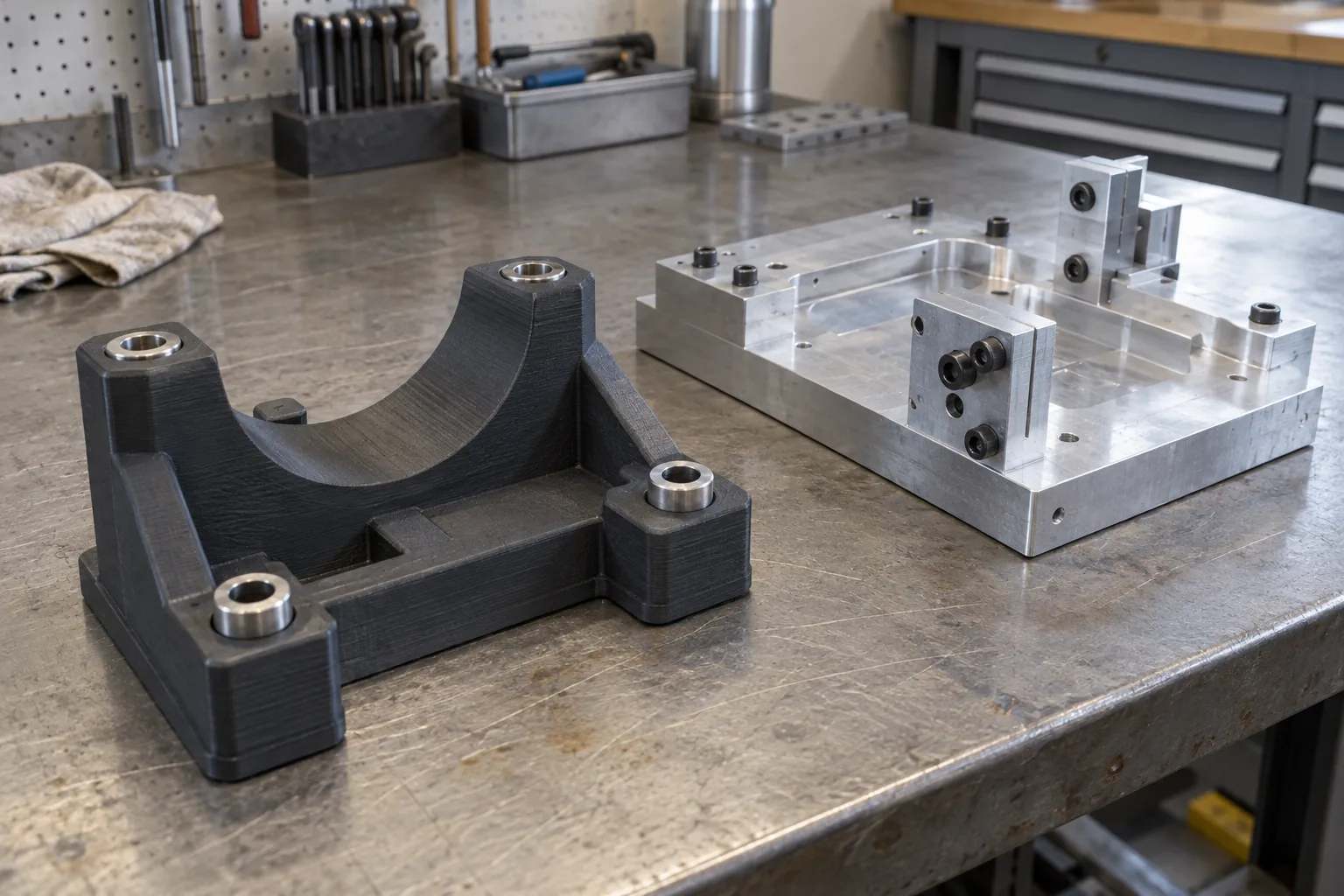
GrabCAD Print 1.118.17.4701, released on 24 September 2026, adds F870 software support, including a Nylon 12CF route for tooling evaluation. Its documented 1000 × 610 × 610 mm envelope and four drying/changeover bays expand large-tooling options. Fitting inside that envelope does not guarantee a successful fixture.
F123 Nylon 12CF availability on the F370 CR is restricted to selected beta users, with firmware and new-head prerequisites. The platforms use different support-material/head pairings, so a Nylon 12CF setup cannot simply be copied between them. Match the model material and its head, support material and its head, slice-height setting and applicable firmware requirements to the target printer before preparing coupons. These choices establish an eligible, reproducible trial configuration; they do not transfer qualification between platforms or establish the fixture's load capacity, stable datums or service life.
Which fixture route deserves a trial?
An inspection or assembly nest mainly locates and supports a workpiece, making printing worth evaluating where geometry changes and contact surfaces can be validated. Clamped workholding must keep those surfaces stable while forces act. Aluminium is the stronger starting candidate when sustained loading, heat or wear dominates.
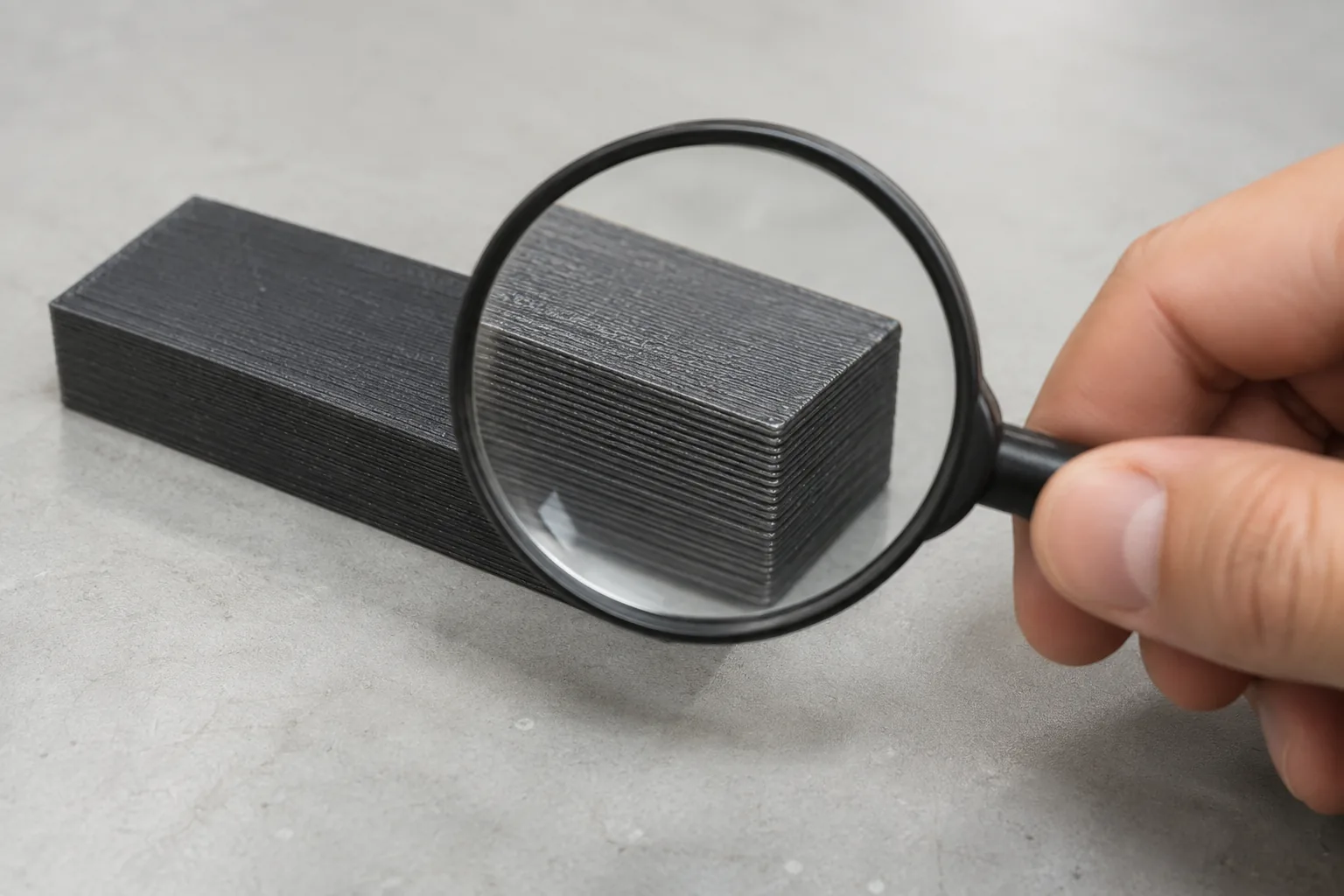
FDM builds polymer in layers. Response can vary with load direction; sustained loads can cause gradual movement, or creep. Carbon-fibre reinforcement does not remove moisture, orientation or tolerance concerns. Compare both routes against the same datum requirements, loads and environment.
| Decision dimension | Condition favouring a printed trial | Condition favouring aluminium |
|---|---|---|
| Function and loading | Locating/support duty; qualify the contact surfaces | Sustained clamping makes stable datums decisive |
| Environment and wear | Printed fixture meets locating stability, stiffness and contact-wear requirements after representative service exposure | Printed fixture falls short after exposure; validated aluminium meets the same requirements in the intended environment |
| Changes and service life | Changing geometry favours evaluating replaceable tooling | Long service demands favour proven wear performance |
| Cost and lead time | The qualified printed offer suits delivery needs | Machining wins after trials and replacements are included |
Use coupons to expose the likely weak points
Use coupons with the intended orientation, contact features and inserts. Define acceptance from the drawing and use conditions. A failure requires a relevant design/process change and retest, or the metal route. A pass permits a full-fixture trial, not production approval.
- Test relevant load directions.
- Observe movement under sustained clamping.
- Reproduce moisture, temperature and coolant exposure.
- Check insert retention and surrounding material.
- Inspect contact wear and surface suitability.
- Measure relevant features before and after exposure.
Validate the complete fixture, including its interfaces
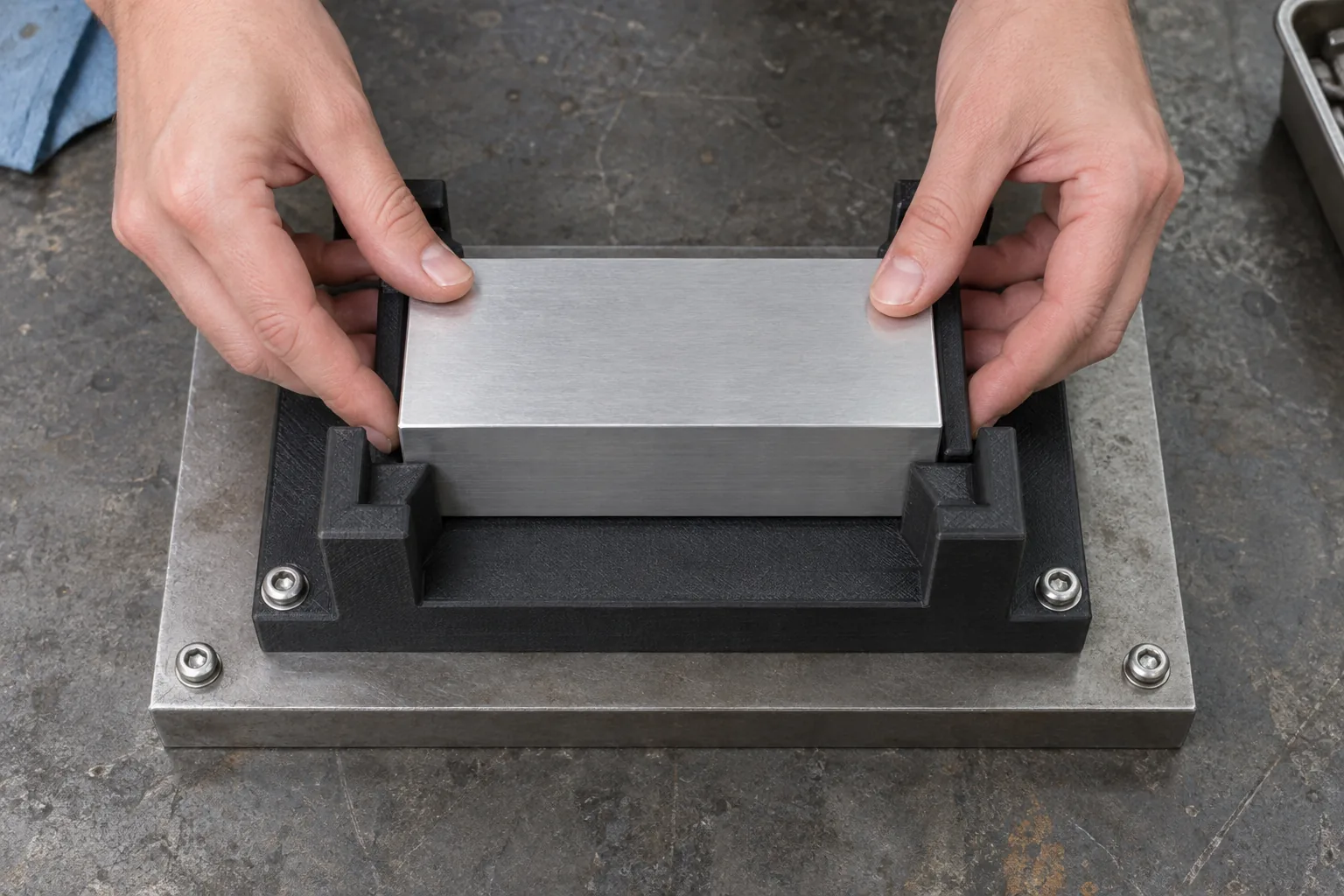
Inspect datums, flatness, seating and repeatability with the intended workpiece. Apply representative loads and exposure; measure locating surfaces during use and after unloading. If the printed fixture misses the drawing requirements, revise the relevant orientation or interface and retest, or retain aluminium. If it passes, verify repeated-use and wear behaviour before comparing commercial offers. Coupon results cannot qualify the full assembly.
Prepare a quote that supports the decision
Provide CAD, envelope, datums, tolerances, inserts, surface requirements and the inspection method. Include actual or expected clamping-load magnitudes and directions, flatness and stiffness or allowable-deflection targets, temperature and coolant/chemical exposure to set representative loading trials and locating acceptance criteria for comparing printed and aluminium routes. Cycles, quantity, lead time and beta acceptability establish service and delivery needs.
Compare routes that can meet those requirements. Include trials, build/machining, finishing, inserts, inspection, failed builds and replacements. Choose qualified printing when complete cost and delivery suit the project; retain aluminium when stable datums, durability or the commercial comparison favours machining. Keep incomplete qualification in evaluation work.
Frequently asked questions
Does an F370 CR trial qualify an F870 fixture?
No. Transfer the test method, then evaluate the intended F870 configuration and fixture. Different build setups, spans or load paths can change results.
Can metal inserts settle the printed-versus-aluminium decision?
Only for the local interface being tested. Check insert retention and the surrounding polymer under the intended load. An acceptable insert connection does not establish stability across the fixture; locating surfaces still need separate measurements.
What if production cannot accept beta uncertainty?
Keep the F370 CR beta in evaluation. Compare an available supported route with machining, then qualify the chosen fixture.
Why record fixture position both under load and after unloading?
An unloaded check alone can miss movement while the fixture is holding the workpiece. Loaded measurements assess whether datums stay within the drawing requirements during use; post-unloading measurements show whether displacement remains. Together they help distinguish an in-use locating problem from a lasting change that needs investigation.