
What BASF introduced
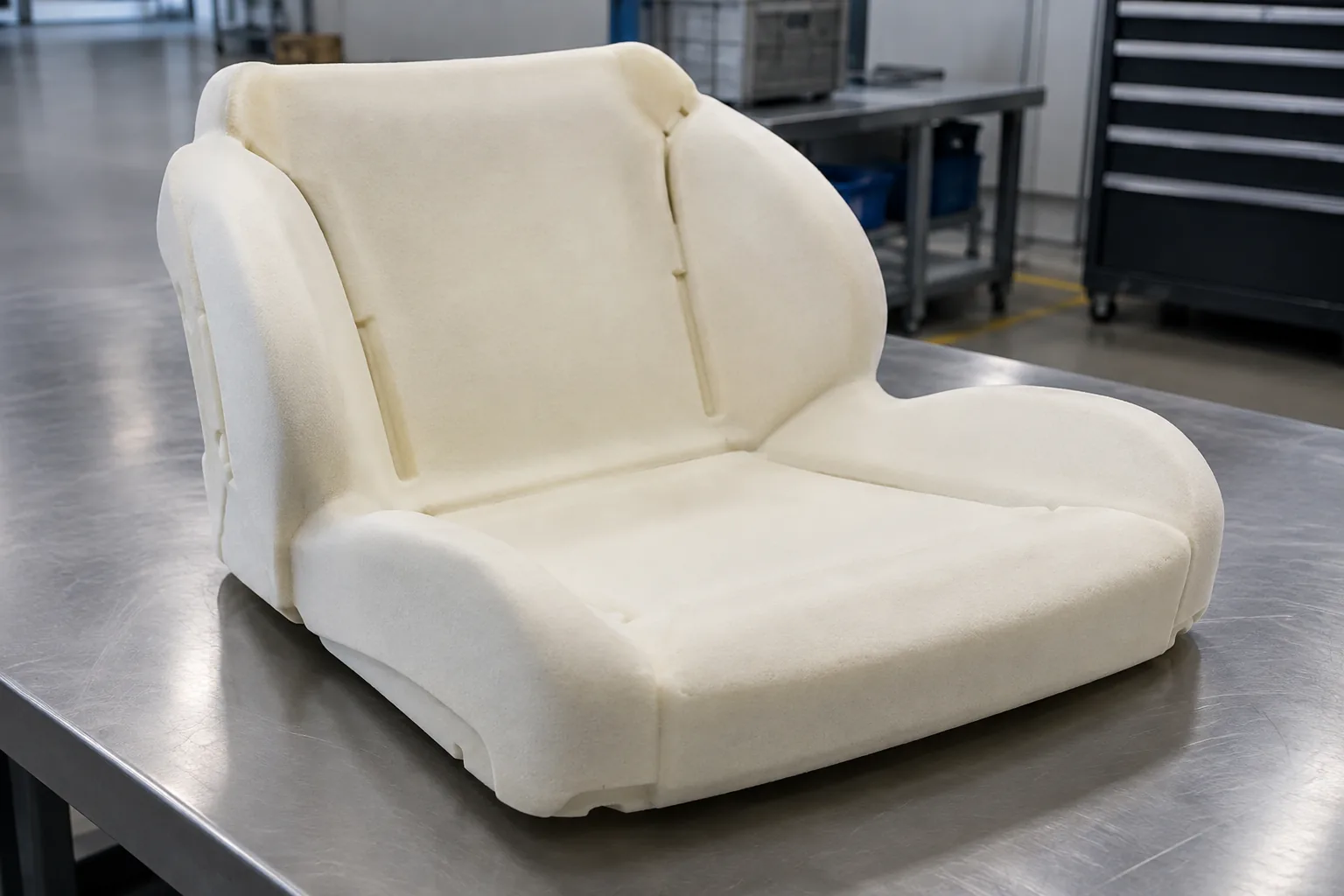
BASF launched the Lupragen BisDMAPU catalyst globally on September 10, 2026. Its chemical identity is 1,3-Bis[3-(dimethylamino)propyl]urea, CAS 52338-87-1. BASF presents it as a low-odor, low-volatility amine catalyst for flexible polyurethane foam. These are supplier statements, not measured results for a manufacturer’s own foam.
Why the gelling–blowing balance matters
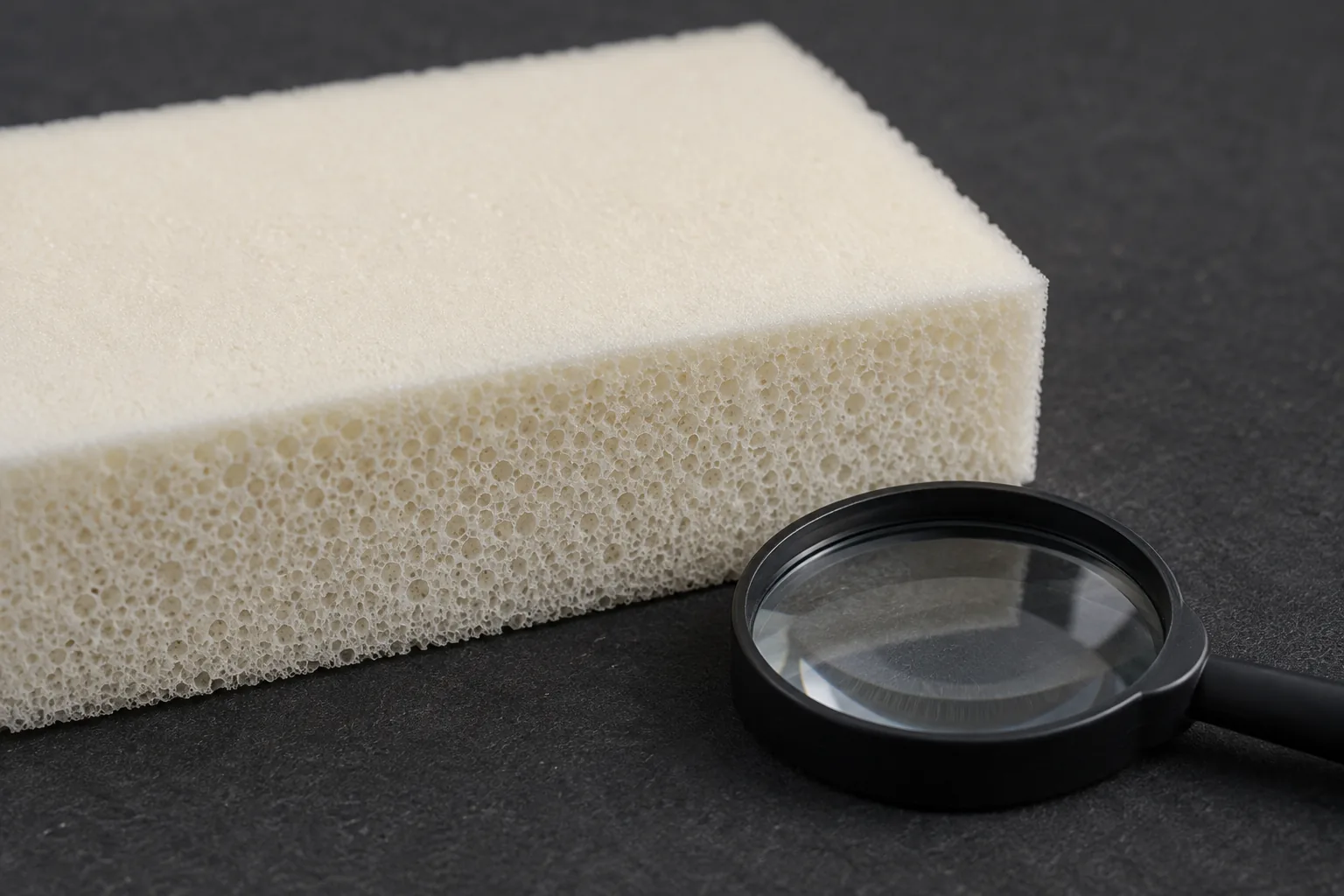
Gelling builds the polymer structure that supports the foam. In water-blown systems, blowing generates gas as water reacts with isocyanate. The structure must develop while the foam expands: gas generation ahead of adequate support can contribute to collapse, while early stiffening can restrict expansion. Cell structure and dimensional behavior reflect this interaction, not catalyst identity alone.
BASF describes BisDMAPU as supporting both reactions. Its behavior alongside the existing catalyst package still needs trials. Record rise behavior and inspect cut faces and shape after curing. If expansion or shape changes, investigate the reaction balance alongside mixing and thermal conditions before attributing the problem to the new material.
Where a substitution study is most relevant
BASF identifies slabstock and molded flexible foams for furniture, mattresses and automotive interiors as application families. An automotive-interior formulation facing an emissions requirement is a relevant screening candidate, provided molding stability and mechanical requirements remain acceptance criteria.
If the current foam already meets the customer specification, substitution needs another defined benefit to justify qualification work. Reactive hotmelt adhesives and other formulated systems require separate application validation; flexible-foam experience does not establish their suitability.
Build a lab-to-pilot comparison that can change the decision
Keep end use, target density, loading or service environment, and acceptance goals comparable. Start with the existing formulation as the control. Obtain supplier guidance before setting a trial dosage, documenting any accompanying catalyst-package changes so their effects remain traceable.
Use laboratory screening to reject unsuitable candidates before pilot molding. Carry promising formulations onto representative equipment and geometry; a bench result does not establish production robustness.
| Evaluation dimension | Evidence to compare | Decision branch |
|---|---|---|
| Foam formation | Rise profile, cell appearance and dimensional stability | If shape or expansion deteriorates, investigate package balance and process conditions; retain the baseline if stability cannot be recovered. |
| Cure and service properties | Demold behavior, required mechanical tests and aging | Advance only when the application’s cure and property requirements are met; apparent surface readiness is insufficient. |
| Emissions and odor | Conditioned foam tested by the customer’s specified methods | If limits are missed, investigate contributors across the formulation and post-treatment rather than assuming a catalyst swap is enough. |
| Delivery conditions | Validated processing, finishing, maintenance, supply and formulation costs | After technical acceptance, compare complete delivery implications; do not infer savings from the material launch. |
Verify the finished foam, not just the raw material
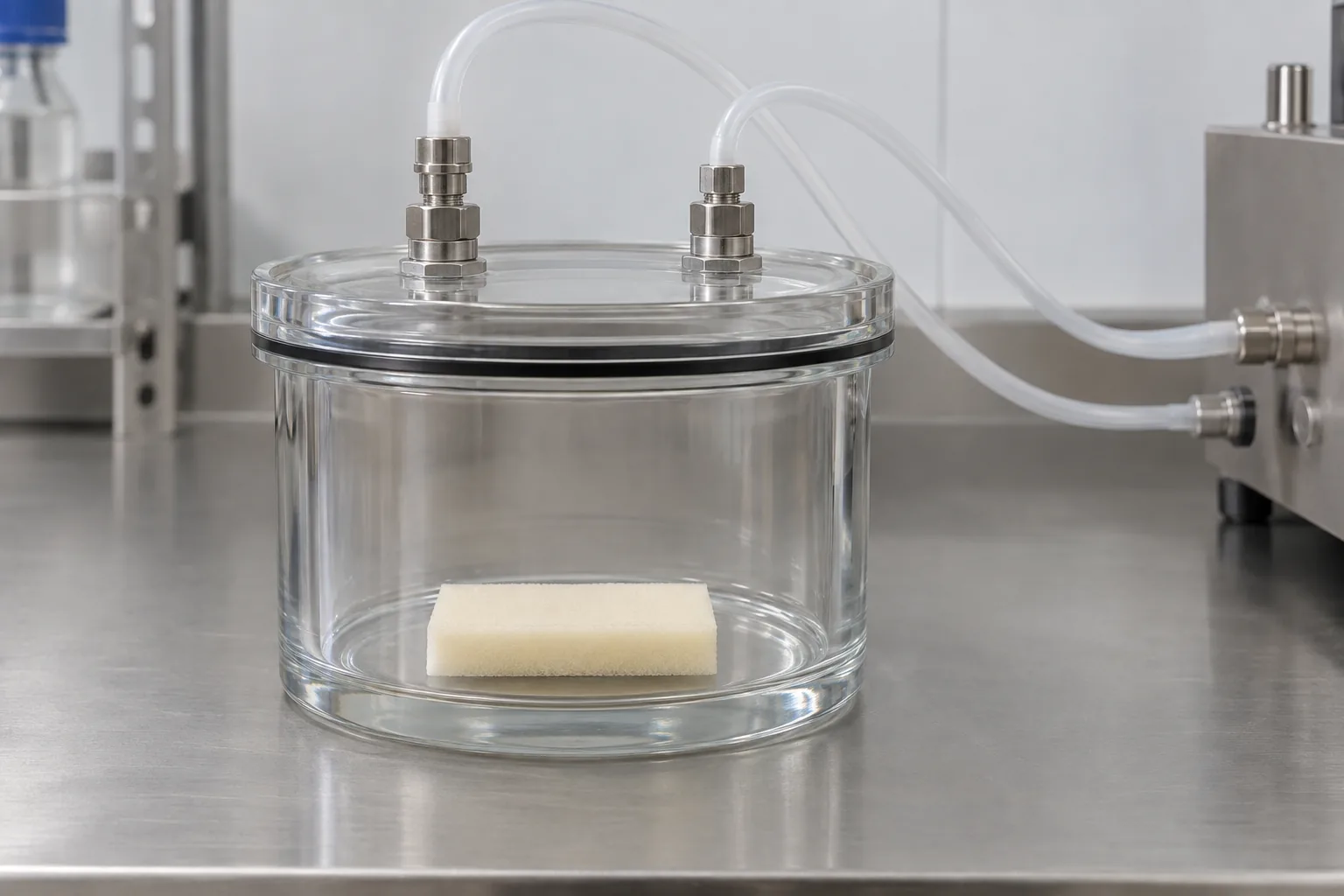
Lower catalyst volatility may reduce a potential source of emissions; it does not describe every substance released by the cured article. Other ingredients, reaction products and residual material can affect the outcome. Odor perception and measured VOC emissions also answer different questions.
Agree sample preparation, conditioning and test methods with the customer. Track temperature, humidity, cure and post-treatment when comparing candidates. A favorable result under different preparation conditions is not evidence of equivalent compliance, and a passing emissions test does not establish flammability or aging performance.
Prepare the supplier discussion and change-control decision
Request current technical and safety documentation, regional availability, lead-time information and notification arrangements for product changes. Ask how the proposed catalyst interacts with the existing package and what formulation evidence supports the suggested trial window.
Prepare the foam type and end use, polyol/isocyanate system, index, blowing system, present catalyst dosages, density, mold conditions and rise/demold targets. Add cell and shape requirements, emissions methods and limits, flammability and aging criteria, annual volume and regional obligations. These inputs let the team define a meaningful trial and decide whether qualification effort is justified.
Frequently asked questions
Can acceptable odor be used to skip VOC testing?
No. A smell assessment does not identify or quantify all emitted compounds. Use the required analytical method even when the foam smells acceptable.
What would support attributing an emissions change to BisDMAPU?
A traceable comparison that holds other influential inputs and sample treatment constant, with repeat observations. When several ingredients change together, isolate their contributions before assigning the effect.
Why might a successful laboratory foam struggle in pilot molding?
Mixing, heat history and part geometry can alter reaction timing and gas retention. Investigate where the pilot process differs before choosing between formulation adjustment and retaining the qualified catalyst package.